

2025 Realistic Verified PT0-003 exam dumps Q&As - PT0-003 Free Update
Use Real PT0-003 Dumps - 100% Free PT0-003 Exam Dumps
NEW QUESTION # 77
During an engagement, a penetration tester needs to break the key for the Wi-Fi network that uses WPA2 encryption. Which of the following attacks would accomplish this objective?
- A. KRACK
- B. Initialization vector
- C. ChopChop
- D. Replay
Answer: A
Explanation:
To break the key for a Wi-Fi network that uses WPA2 encryption, the penetration tester should use the KRACK (Key Reinstallation Attack) attack.
* KRACK (Key Reinstallation Attack):
* Definition: KRACK is a vulnerability in the WPA2 protocol that allows attackers to decrypt and potentially inject packets into a Wi-Fi network by manipulating and replaying cryptographic handshake messages.
* Impact: This attack exploits flaws in the WPA2 handshake process, allowing an attacker to break the encryption and gain access to the network.
* Other Attacks:
* ChopChop: Targets WEP encryption, not WPA2.
* Replay: Involves capturing and replaying packets to create effects such as duplicating transactions; it does not break WPA2 encryption.
* Initialization Vector (IV): Related to weaknesses in WEP, not WPA2.
Pentest References:
* Wireless Security: Understanding vulnerabilities in Wi-Fi encryption protocols, such as WPA2, and how they can be exploited.
* KRACK Attack: A significant vulnerability in WPA2 that requires specific techniques to exploit.
By using the KRACK attack, the penetration tester can break WPA2 encryption and gain unauthorized access to the Wi-Fi network.
Top of Form
Bottom of Form
NEW QUESTION # 78
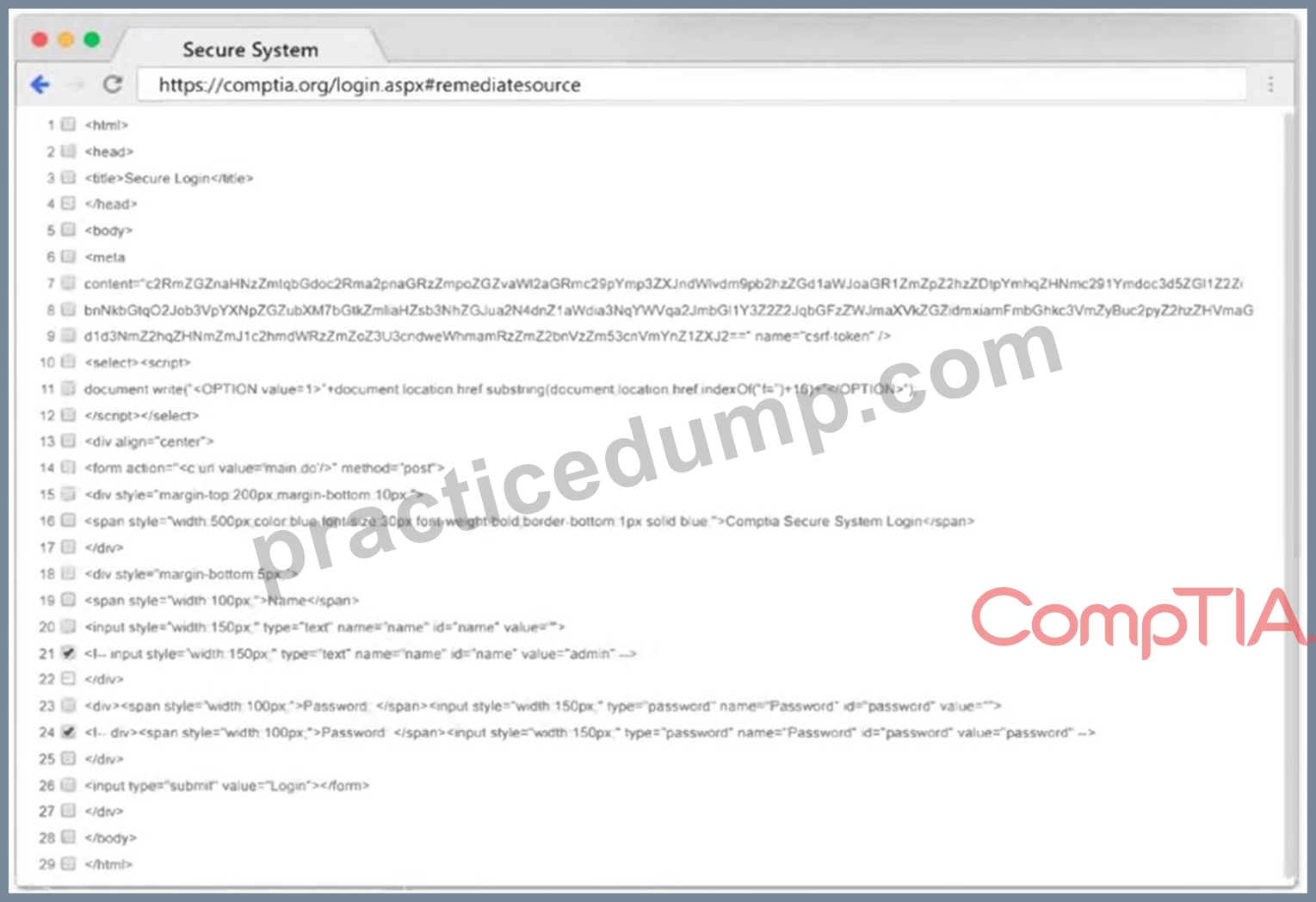
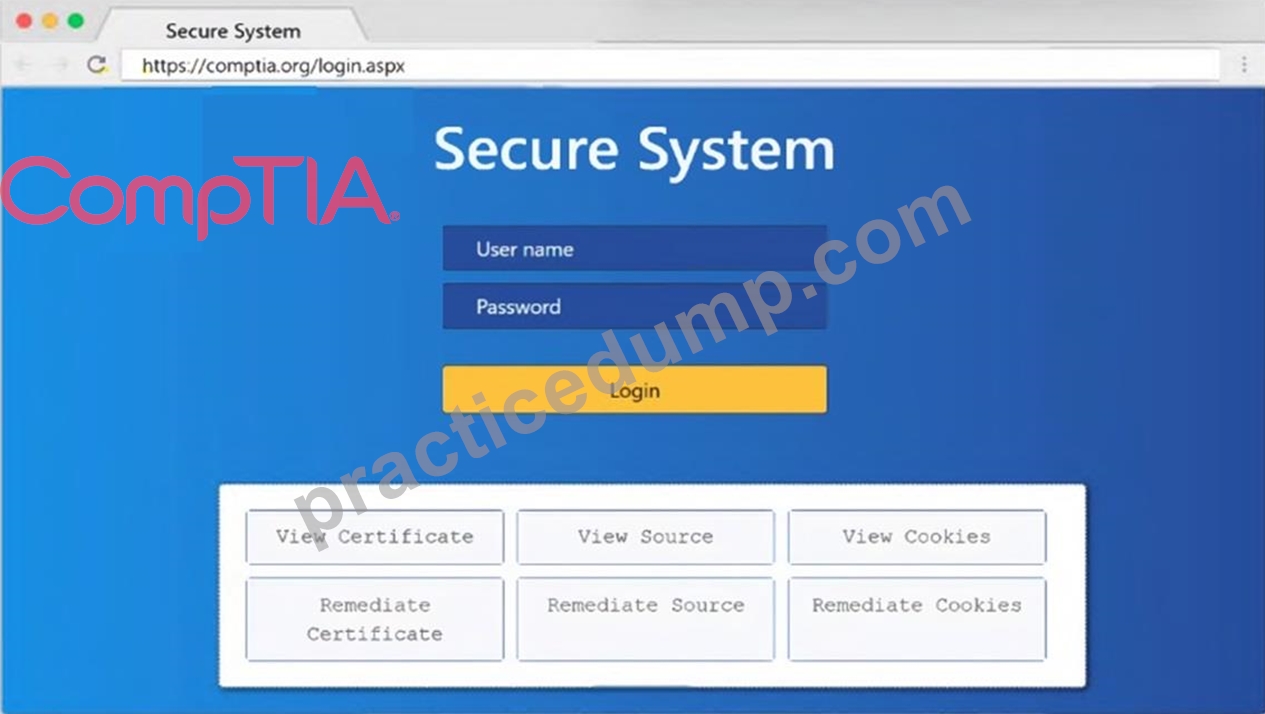
You are a penetration tester reviewing a client's website through a web browser.
INSTRUCTIONS
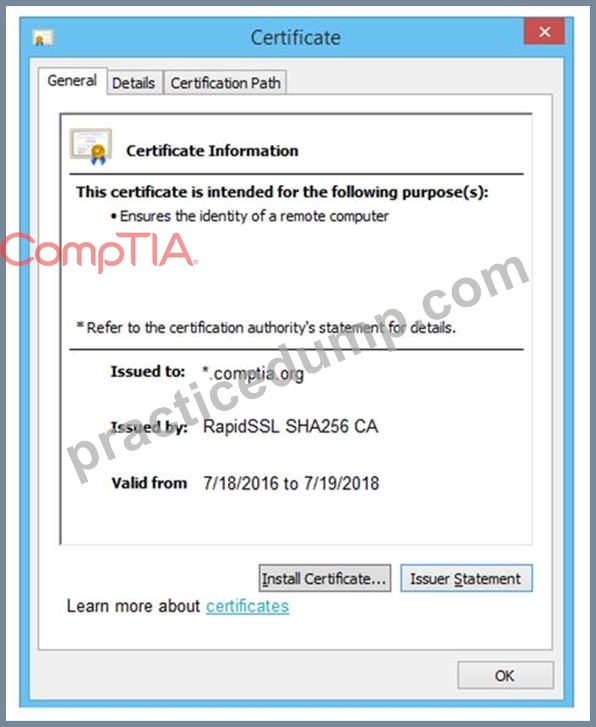
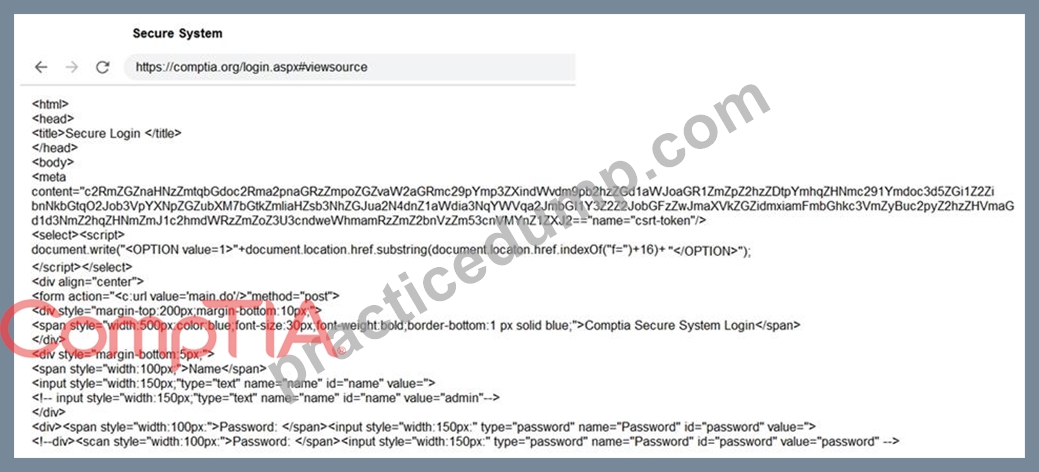
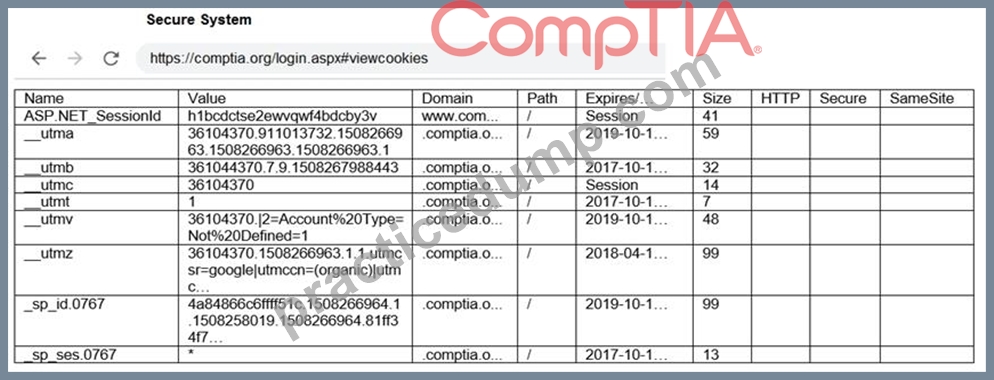
Review all components of the website through the browser to determine if vulnerabilities are present.
Remediate ONLY the highest vulnerability from either the certificate, source, or cookies.
If at any time you would like to bring back the initial state of the simulation, please click the Reset All button.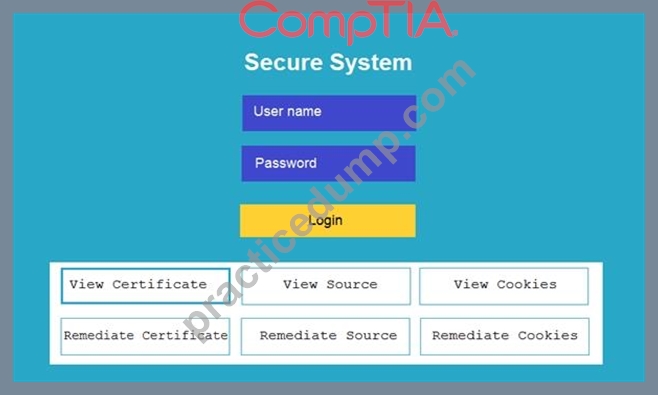
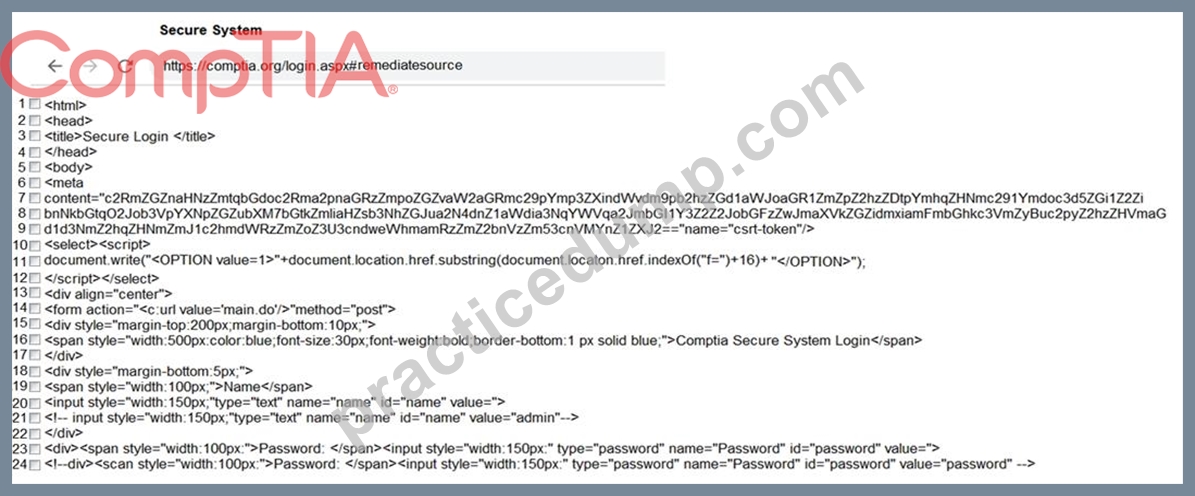
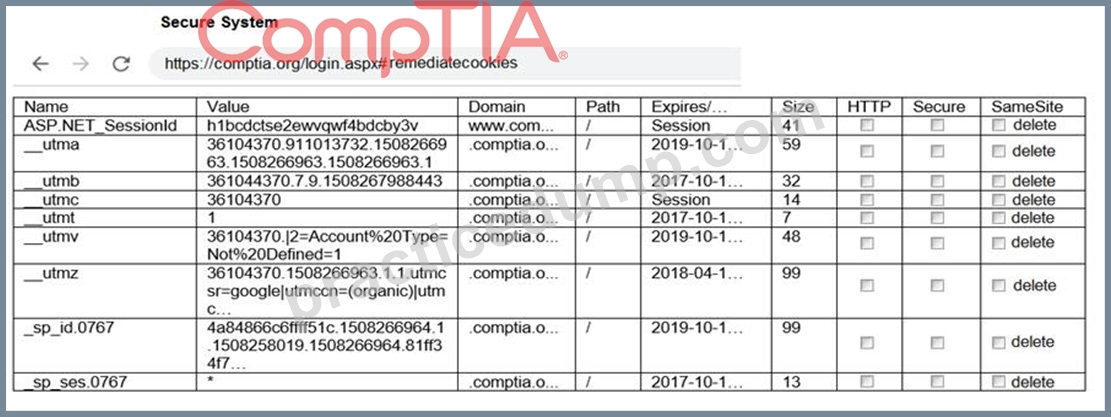
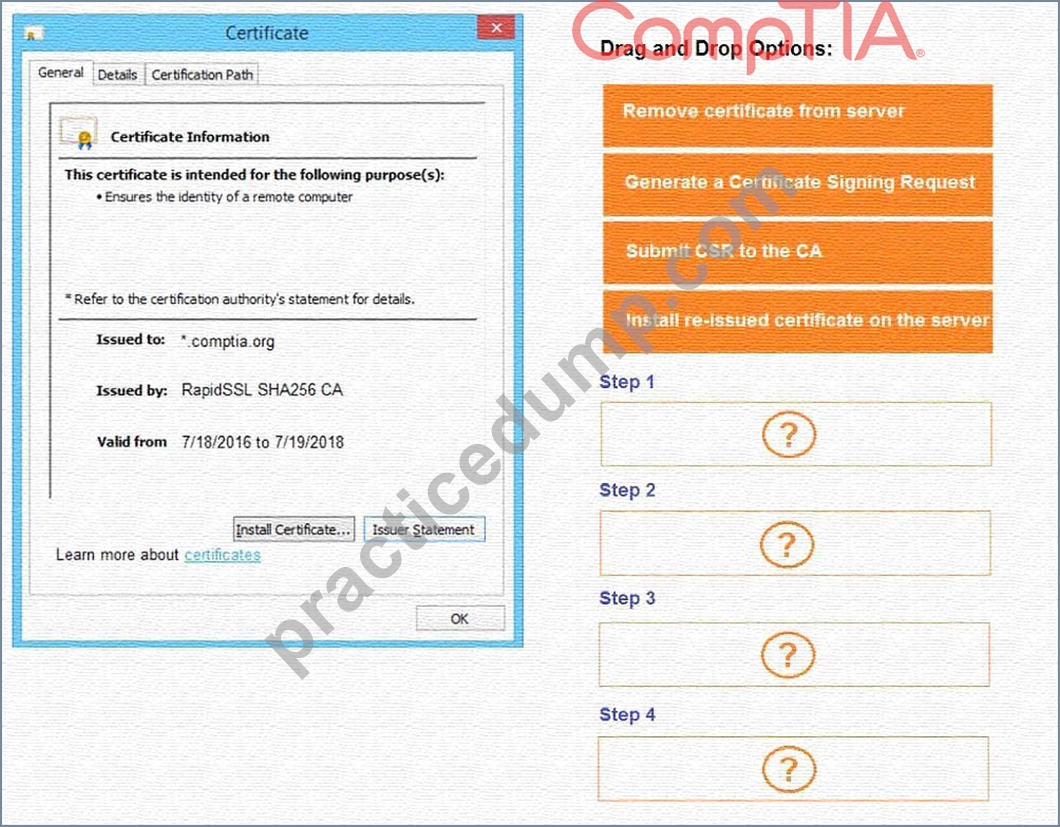
Answer:
Explanation: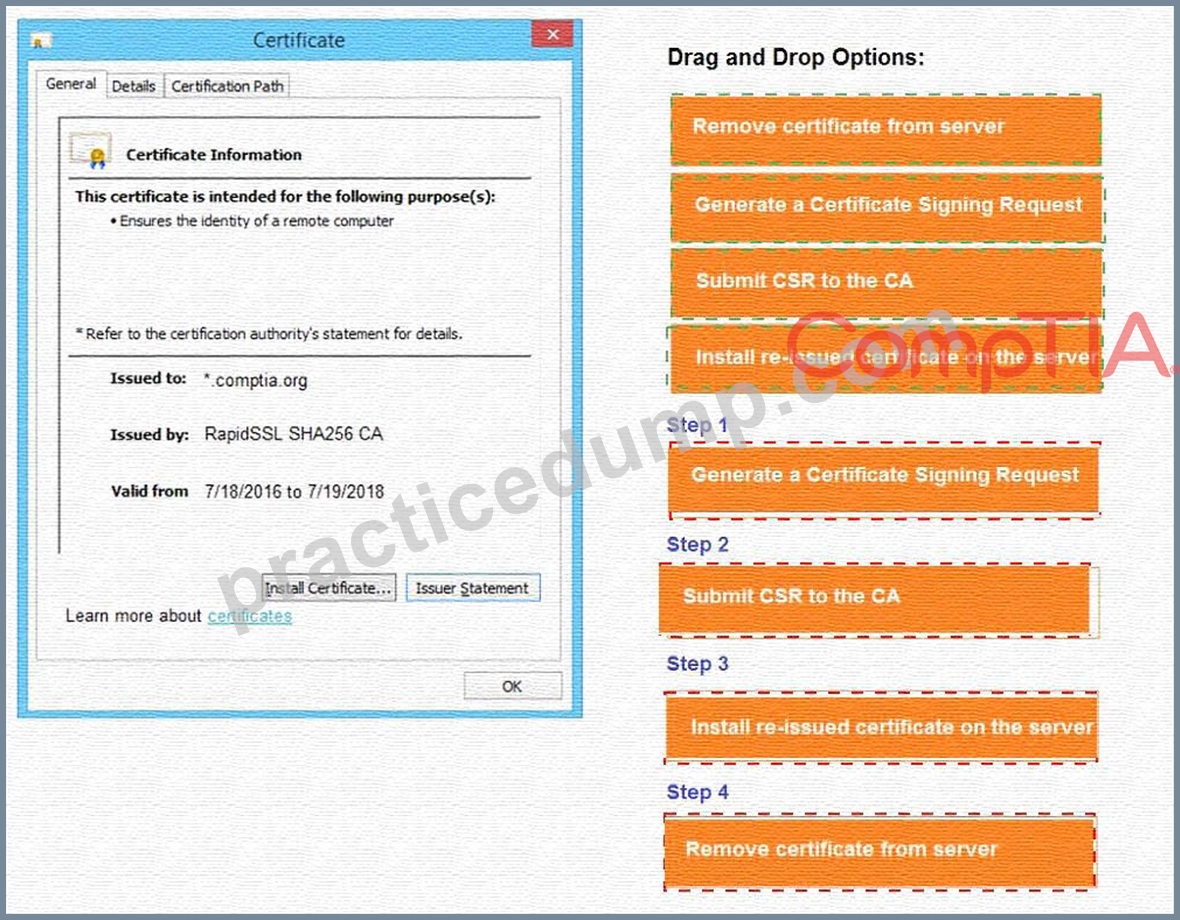
Explanation:
A screenshot of a computer Description automatically generated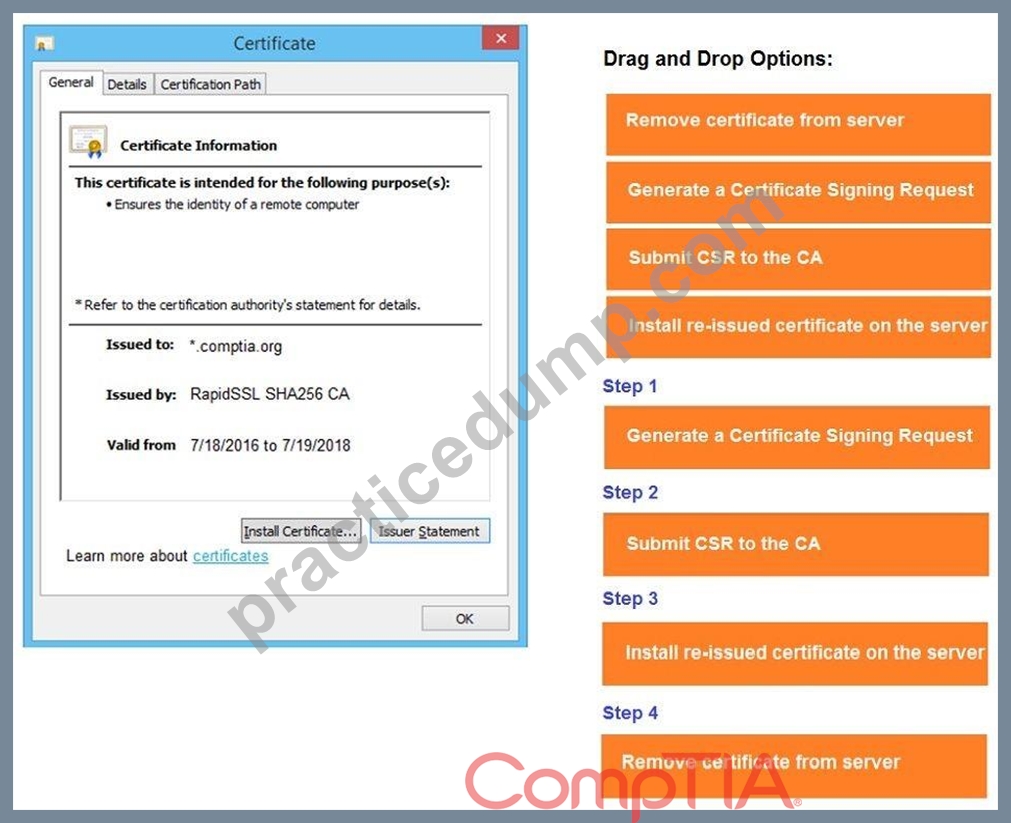
NEW QUESTION # 79
A penetration tester is conducting reconnaissance on a target network. The tester runs the following Nmap command: nmap -sv -sT -p - 192.168.1.0/24. Which of the following describes the most likely purpose of this scan?
- A. Attack path mapping
- B. User enumeration
- C. Service discovery
- D. OS fingerprinting
Answer: C
Explanation:
The Nmap command nmap -sv -sT -p- 192.168.1.0/24 is designed to discover services on a network. Here is a breakdown of the command and its purpose:
Command Breakdown:
nmap: The network scanning tool.
-sV: Enables service version detection. This option tells Nmap to determine the version of the services running on open ports.
-sT: Performs a TCP connect scan. This is a more reliable method of scanning as it completes the TCP handshake but can be easily detected by firewalls and intrusion detection systems.
-p-: Scans all 65535 ports. This ensures a comprehensive scan of all possible TCP ports.
192.168.1.0/24: Specifies the target network range (subnet) to be scanned.
Purpose of the Scan:
Service Discovery (answer: C): The primary purpose of this scan is to discover Reference:
Service discovery is a common task in penetration testing to map out the network services and versions, as seen in various Hack The Box (HTB) write-ups where comprehensive service enumeration is performed before further actions.
Conclusion: The nmap -sv -sT -p- 192.168.1.0/24 command is most likely used for service discovery, as it aims to identify all running services and their versions on the target subnet.
NEW QUESTION # 80
A penetration tester finds a PHP script used by a web application in an unprotected internal source code repository. After reviewing the code, the tester identifies the following:
Which of the following tools will help the tester prepare an attack for this scenario?
- A. Hydra and crunch
- B. Burp Suite and DIRB
- C. Nmap and OWASP ZAP
- D. Netcat and cURL
Answer: D
Explanation:
Netcat and cURL are tools that will help the tester prepare an attack for this scenario, as they can be used to establish a TCP connection, send payloads, and receive responses from the target web server. Netcat is a versatile tool that can create TCP or UDP connections and transfer data between hosts. cURL is a tool that can transfer data using various protocols, such as HTTP, FTP, SMTP, etc. The tester can use these tools to exploit the PHP script that executes shell commands with the value of the "item" variable.
NEW QUESTION # 81
Which of the following processes helps ensure that a penetration test report is accurate, unbiased, and free from errors?
- A. Goal reprioritization
- B. Secure distribution
- C. Use AI
- D. Peer review
Answer: D
Explanation:
A peer review process ensures that a penetration test report is accurate, unbiased, and free from errors.
* Peer review (Option B):
* Senior security professionals verify findings, risk levels, and remediation recommendations.
* Reduces the risk of misinterpretation or incorrect data in reports.
NEW QUESTION # 82
If a penetration tester unintentionally disrupts a critical system, what should they do next?
- A. Follow the escalation process.
- B. Select the target.
- C. Restore the configuration.
- D. Perform a BIA.
Answer: A
Explanation:
If a penetration tester unintentionally disrupts a critical system, they must immediately follow the client's escalation process to ensure proper handling.
* Follow the escalation process (Option C):
* The penetration testing engagement follows a predefined incident response and escalation plan.
* The tester documents the issue, informs stakeholders, and works with IT teams to minimize impact.
NEW QUESTION # 83
A penetration tester is conducting an assessment on 192.168.1.112. Given the following output:
[ATTEMPT] target 192.168.1.112 - login "root" - pass "abcde"
[ATTEMPT] target 192.168.1.112 - login "root" - pass "edcfg"
[ATTEMPT] target 192.168.1.112 - login "root" - pass "qazsw"
[ATTEMPT] target 192.168.1.112 - login "root" - pass "tyuio"
Which of the following is the penetration tester conducting?
- A. Credential stuffing
- B. Brute force
- C. Port scan
- D. DoS attack
Answer: B
NEW QUESTION # 84
dnscmd.exe /config /serverlevelplugindll C:\users\necad-TA\Documents\adduser.dll Which of the following is the penetration tester trying to achieve?
- A. Privilege escalation
- B. DNS enumeration
- C. A list of available users
- D. Command injection
Answer: A
Explanation:
The tester is attempting to register a malicious DLL as a server-level plugin to escalate privileges.
* Privilege escalation (Option B):
* The command uses dnscmd.exe, a legitimate Windows tool for managing DNS servers.
* By setting a malicious DLL (adduser.dll) as a server-level plugin, attackers can gain SYSTEM- level privileges.
* This technique is a DLL hijacking attack.
NEW QUESTION # 85
SIMULATION
Using the output, identify potential attack vectors that should be further investigated.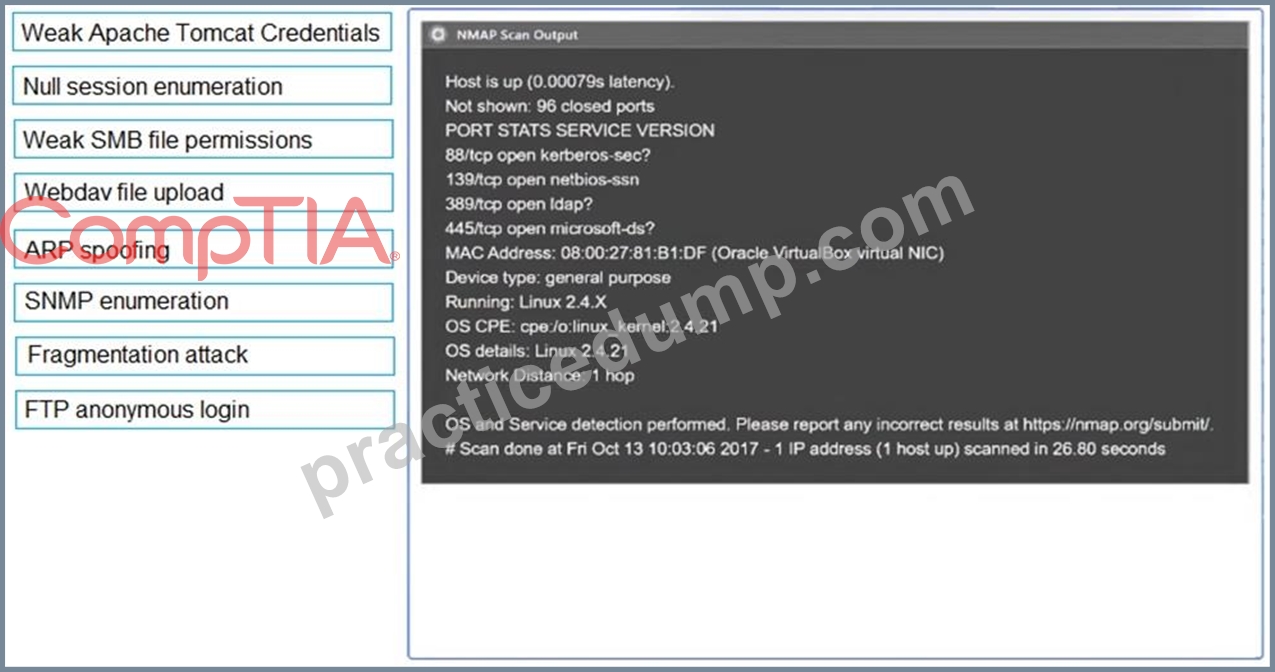
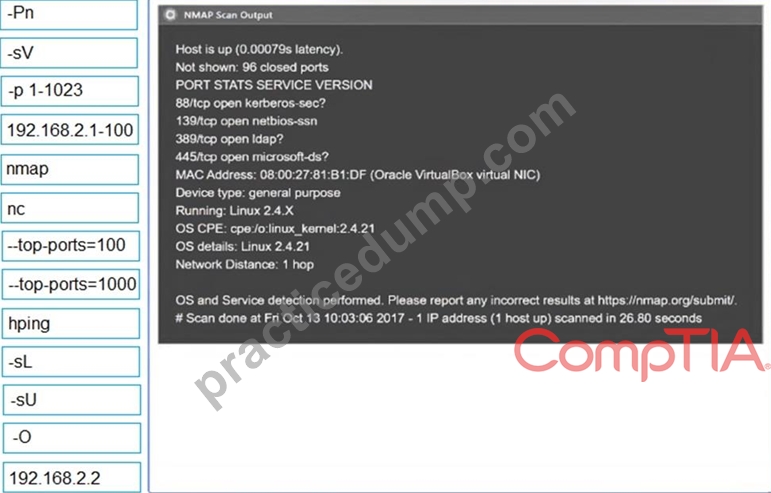
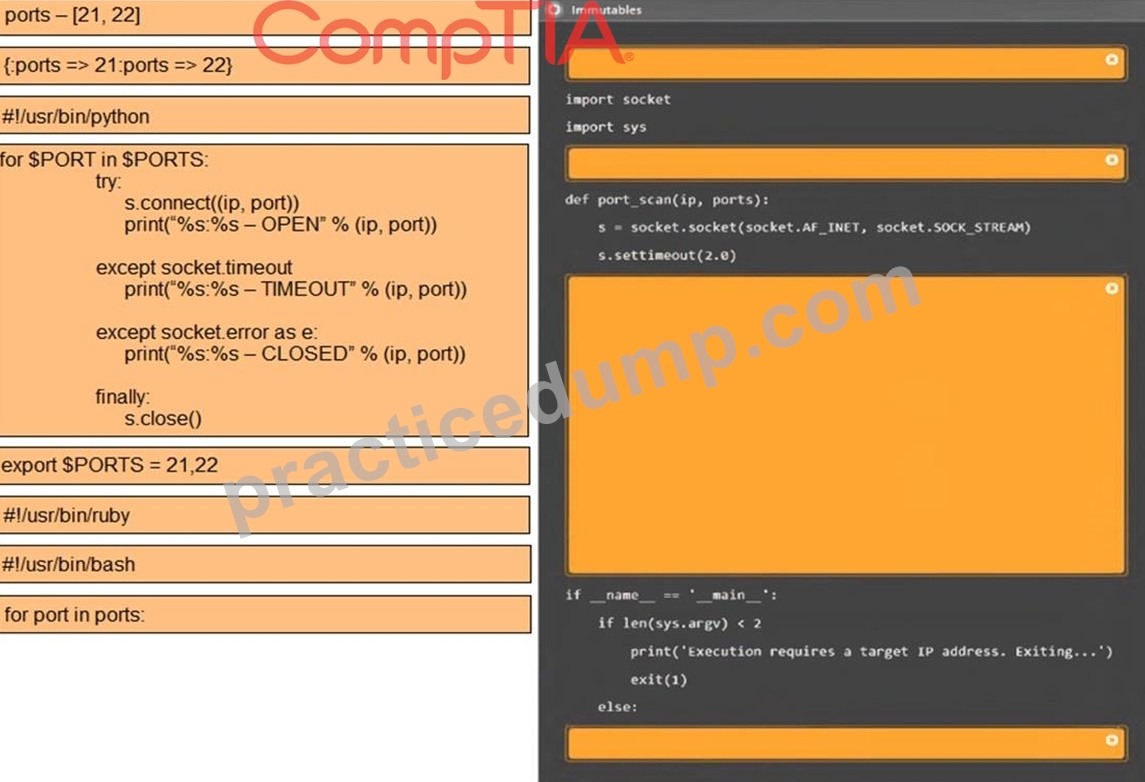
Answer:
Explanation:
See explanation below.
Explanation:
1: Null session enumeration
Weak SMB file permissions
Fragmentation attack
2: nmap
-sV
-p 1-1023
192.168.2.2
3: #!/usr/bin/python
export $PORTS = 21,22
for $PORT in $PORTS:
try:
s.connect((ip, port))
print("%s:%s - OPEN" % (ip, port))
except socket.timeout
print("%:%s - TIMEOUT" % (ip, port))
except socket.error as e:
print("%:%s - CLOSED" % (ip, port))
finally
s.close()
port_scan(sys.argv[1], ports)
NEW QUESTION # 86
Which of the following describes the process of determining why a vulnerability scanner is not providing results?
- A. Goal reprioritization
- B. Root cause analysis
- C. Secure distribution
- D. Peer review
Answer: B
Explanation:
Root cause analysis involves identifying the underlying reasons why a problem is occurring. In the context of a vulnerability scanner not providing results, performing a root cause analysis would help determine why the scanner is failing to deliver the expected output. Here's why option A is correct:
* Root Cause Analysis: This is a systematic process used to identify the fundamental reasons for a problem. It involves investigating various potential causes and pinpointing the exact issue that is preventing the vulnerability scanner from working correctly.
* Secure Distribution: This refers to the secure delivery and distribution of software or updates, which is not relevant to troubleshooting a vulnerability scanner.
* Peer Review: This involves evaluating work by others in the same field to ensure quality and accuracy, but it is not directly related to identifying why a tool is malfunctioning.
* Goal Reprioritization: This involves changing the priorities of goals within a project, which does not address the technical issue of the scanner not working.
References from Pentest:
* Horizontall HTB: Demonstrates the process of troubleshooting and identifying issues with tools and their configurations to ensure they work correctly.
* Writeup HTB: Emphasizes the importance of thorough analysis to understand why certain security tools may fail during an assessment.
NEW QUESTION # 87
A penetration tester attempts to run an automated web application scanner against a target URL. The tester validates that the web page is accessible from a different device. The tester analyzes the following HTTP request header logging output:
200; GET /login.aspx HTTP/1.1 Host: foo.com; User-Agent: Mozilla/5.0
200; GET /login.aspx HTTP/1.1 Host: foo.com; User-Agent: Mozilla/5.0
No response; POST /login.aspx HTTP/1.1 Host: foo.com; User-Agent: curl
200; POST /login.aspx HTTP/1.1 Host: foo.com; User-Agent: Mozilla/5.0
No response; GET /login.aspx HTTP/1.1 Host: foo.com; User-Agent: python Which of the following actions should the tester take to get the scans to work properly?
- A. Change the source IP with a VPN.
- B. Modify the scanner to only use HTTP GET requests.
- C. Modify the scanner to slow down the scan.
- D. Modify the scanner user agent.
Answer: D
NEW QUESTION # 88
A penetration tester is conducting a wireless security assessment for a client with 2.4GHz and 5GHz access points. The tester places a wireless USB dongle in the laptop to start capturing WPA2 handshakes. Which of the following steps should the tester take next?
- A. Use Kismet to automatically place the wireless dongle in monitor mode and collect handshakes.
- B. Run KARMA to break the password.
- C. Enable monitoring mode using Aircrack-ng.
- D. Research WiGLE.net for potential nearby client access points.
Answer: C
Explanation:
Monitoring Mode:
Definition: Monitoring mode allows a wireless network interface controller to capture all packets on a wireless channel, regardless of the destination.
Importance: This mode is necessary for capturing the four-way handshake required for WPA2 cracking.
Aircrack-ng Suite:
Aircrack-ng: A complete suite of tools to assess Wi-Fi network security. It includes tools for monitoring, attacking, testing, and cracking.
Enabling Monitor Mode: The specific tool used to enable monitor mode in Aircrack-ng is airmon-ng.
airmon-ng start wlan0
This command starts the interface wlan0 in monitoring mode.
Steps to Capture WPA2 Handshakes:
Enable Monitor Mode: Use airmon-ng to enable monitor mode.
Capture Handshakes: Use airodump-ng to capture packets and WPA2 handshakes.
airodump-ng wlan0mon
Pentest Reference:
Wireless Security Assessments: Understanding the importance of monitoring mode for capturing data during wireless penetration tests.
Aircrack-ng Tools: Utilizing the suite effectively for tasks like capturing WPA2 handshakes, deauthenticating clients, and cracking passwords.
By enabling monitoring mode with Aircrack-ng, the tester can capture the necessary WPA2 handshakes to further analyze and attempt to crack the Wi-Fi network's password.
NEW QUESTION # 89
A penetration tester uses Hashcat to crack hashes discovered during a penetration test and obtains the following output:
ad09cd16529b5f5a40a3e15344e57649f4a43a267a97f008af01af803603c4c8 : Summer2023 !!
7945bb2bb08731fc8d57680ffa4aefec91c784d231de029c610b778eda5ef48b:p@ssWord123 ea88ceab69cb2fb8bdcf9ef4df884af219fffbffab473ec13f20326dc6f84d13: Love-You999 Which of the following is the best way to remediate the penetration tester's discovery?
- A. Encrypting the passwords with a stronger algorithm
- B. Setting the minimum password length to ten characters
- C. Implementing a blocklist of known bad passwords
- D. Requiring passwords to follow complexity rules
Answer: C
Explanation:
The penetration tester's discovery of passwords vulnerable to hash cracking suggests a lack of robust password policies within the organization. Among the options provided, implementing a blocklist of known bad passwords is the most effective immediate remediation. This measure would prevent users from setting passwords that are easily guessable or commonly used, which are susceptible to hash cracking tools like Hashcat.
Requiring passwords to follow complexity rules (Option A) can be helpful, but attackers can still crack complex passwords if they are common or have been exposed in previous breaches. Setting a minimum password length (Option C) is a good practice, but length alone does not ensure a password's strength against hash cracking techniques. Encrypting passwords with a stronger algorithm (Option D) is a valid long-term strategy but would not prevent users from choosing weak passwords that could be easily guessed before hash cracking is even necessary.
Therefore, a blocklist addresses the specific vulnerability exposed by the penetration tester-users setting weak passwords that can be easily cracked. It's also worth noting that the best practice is a combination of strong, enforced password policies, user education, and the use of multi-factor authentication to enhance security further.
NEW QUESTION # 90
Appending string values onto another string is called:
- A. compilation
- B. conjunction
- C. connection
- D. concatenation
Answer: D
Explanation:
Concatenation is the term used to describe the process of appending string values onto another string. In Python, concatenation can be done using the + operator, such as "Hello" + "World" = "HelloWorld"4.
Reference: https://docs.microsoft.com/en-us/dotnet/csharp/how-to/concatenate-multiple-strings
NEW QUESTION # 91
A penetration tester needs to confirm the version number of a client's web application server. Which of the following techniques should the penetration tester use?
- A. Banner grabbing
- B. Directory brute forcing
- C. SSL certificate inspection
- D. URL spidering
Answer: A
Explanation:
Banner grabbing is a technique used to gather information about a service running on an open port, which often includes the version number of the application or server. Here's why banner grabbing is the correct answer:
* Banner Grabbing: It involves connecting to a service and reading the welcome banner or response, which typically includes version information. This is a direct method to identify the version number of a web application server.
* SSL Certificate Inspection: While it can provide information about the server, it is not reliable for identifying specific application versions.
* URL Spidering: This is used for discovering URLs and resources within a web application, not for version identification.
* Directory Brute Forcing: This is used to discover hidden directories and files, not for identifying version information.
References from Pentest:
* Luke HTB: Shows how banner grabbing can be used to identify the versions of services running on a server.
* Writeup HTB: Demonstrates the importance of gathering version information through techniques like banner grabbing during enumeration phases.
Conclusion:
Option C, banner grabbing, is the most appropriate technique for confirming the version number of a web application server.
NEW QUESTION # 92
......
Pass PT0-003 exam Updated 241 Questions: https://certkingdom.practicedump.com/PT0-003-practice-dumps.html