

[Oct 09, 2025] Pass AgilePM AgilePM-Practitioner Exam With 133 Questions
Ultimate Guide to Prepare Free APMG-International AgilePM-Practitioner Exam Questions and Answer
APMG-International AgilePM-Practitioner Exam Syllabus Topics:
| Topic | Details |
|---|---|
| Topic 1 |
|
| Topic 2 |
|
| Topic 3 |
|
| Topic 4 |
|
NEW QUESTION # 34
Column 1 is a list of actions taken within the project. For each action in Column 1, select from Column 2 the iterative development activity that the action represents. Each selection from Column 2 can be used once, more than once or not at all.
Column 1:
1.The Solution Development Team cleared and prepared the area, ready for the bar infrastructure to be installed.
2.The Gardener decided the order in which the flowers would be planted in the borders and jotted it down in a notebook.
3.Before the Solution Development Team built the infrastructure for the bar area, the Architect pointed out what was required.
4.The Architect checked with the decorators that tasks had been completed to a satisfactory standard, and agreed a list of items that needed further coats of paint or cleaning up.
5.The Gardener began planting the borders and has placed an order for further bulbs to complete this task.
Column 2:
A) Thought
B) Action
C) Conversation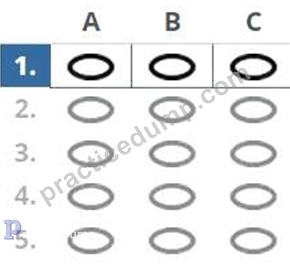
Answer:
Explanation: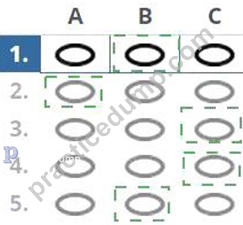
Explanation:
For each action in Column 1, here is the iterative development activity that the action represents from Column
2:
* The Solution Development Team cleared and prepared the area, ready for the bar infrastructure to be installed.
* B. Action
* The Gardener decided the order in which the flowers would be planted in the borders and jotted it down in a notebook.
* A. Thought
* Before the Solution Development Team built the infrastructure for the bar area, the Architect pointed out what was required.
* C. Conversation
* The Architect checked with the decorators that tasks had been completed to a satisfactory standard, and agreed a list of items that needed further coats of paint or cleaning up.
* C. Conversation
* The Gardener began planting the borders and has placed an order for further bulbs to complete this task.
* B. Action
NEW QUESTION # 35
An external web developer is to be contracted to create the new coffee bar insurance area on the existing web site. The chosen web developer will only agree to work on a 'fixed price for a fixed specification' contract.
What action should the Project Manager take?
- A. Refuse to employ the chosen web developer as this is not an Agile
approach to project management. - B. Ensure the later elements of the project reflect the most valuable features of the product being built by the contractor.
- C. Agree to a 'fixed price for a fixed specification' contract with a requirement for the web developer to provide daily progress reports.
- D. Divide the work into component parts to ensure the web developer is focused on, and is paid to deliver, only what is specified for each component.
Answer: D
Explanation:
Dividing the work into smaller, well-defined component parts is a strategic approach when dealing with fixed-price contracts within an Agile framework. This method allows for greater flexibility and adaptability, as each component can be specified in detail, making it clear what the external web developer is responsible for delivering. This approach aligns with Agile principles by enabling incremental development and delivery, allowing for adjustments and refinements to be made as the project progresses and more information becomes available.
References:
In Agile Project Management, particularly when incorporating external resources or contractors, breaking down the project into smaller, manageable parts is a common practice. This not only facilitates better control and tracking of progress but also ensures that the project remains adaptable, with the capacity to respond to changes in requirements or priorities. This approach is in line with Agile methodologies that emphasize iterative development, customer collaboration, and responding to change over following a fixed plan.
NEW QUESTION # 36
If the team cannot agree the system content, which 2 actions should the Workshop Facilitator take?
- A. Agree to disagree, and close the workshop acknowledging that all participants are entitled to their own view.
- B. Prepare a report describing the outcome of the workshop.
- C. Present own interpretation of what the system should include.
- D. Present the group with a predefined specification of what should be included.
- E. Facilitate the creation of a list of actions to be carried out after the workshop, to resolve the issue.
Answer: B,E
Explanation:
The two actions that the Workshop Facilitator should take if the team cannot agree on the system content are:
* C. Facilitate the creation of a list of actions to be carried out after the workshop, to resolve the issue. This will ensure that the disagreement does not stall the project and that there is a clear plan for how to move forward.
* E. Prepare a report describing the outcome of the workshop. This will provide a record of the discussion and any decisions made, which can be useful for future reference and for keeping stakeholders informed.
Please note that while presenting their own interpretation of what the system should include (option A) or presenting the group with a predefined specification of what should be included (option B) might seem like potential solutions, these actions could bias the discussion and may not lead to a solution that meets all stakeholders' needs. Agreeing to disagree and closing the workshop (option D) could leave the issue unresolved, which could cause problems later in the project. The facilitator's role is to guide the discussion and help the team reach a consensus, not to impose their own views or prematurely end the discussion.
NEW QUESTION # 37
The Change Manager is discussing the relocation of the Selco staff to the UniCo office with the Operations Director. They are using the SCARF framework of people's social experience to guide management actions. Answer the following questions about the use of David Rock's SCARF framework to increase the motivation for change.
Some of the employees of UniCo are unhappy that they have been given no choice in losing additional leisure space to accommodate the transferred Selco employees. The Change Manager has arranged for affected members to meet with the Selco employees at a social lunch.
Is this an appropriate approach to reward the brain in the need for 'autonomy,' and why?
- A. No, because 'autonomy' is best rewarded by establishing clear change expectations.
- B. Yes, because 'autonomy' is best rewarded by listening and supporting affected staff.
- C. Yes, because inviting colleagues to interact will make staff feel less powerless.
- D. No, because encouraging social interactions rewards the brain's need for 'relatedness.'
Answer: D
Explanation:
Comprehensive and Detailed Step-by-Step Explanation:
The SCARF framework identifies five key domains of social experience that influence motivation: Status, Certainty, Autonomy, Relatedness, and Fairness. This question asks if the action taken by the Change Manager appropriately addresses the autonomy domain.
1. Why Autonomy is Not Addressed
* Autonomy refers to an individual's sense of control over their choices and environment.
* In this scenario, UniCo employees feel powerless due to the loss of leisure space without consultation. Autonomy could have been addressed by giving staff more control or input during the decision-making process, such as asking for their preferences or involving them in discussions about how the space could be used.
* Arranging a social lunch does not restore autonomy, as it does not give employees more control or decision-making power.
2. Why Relatedness is Addressed
* Relatedness refers to the sense of connection and belonging among individuals in a group.
* By organizing a social lunch for UniCo employees and Selco staff, the Change Manager is fostering social interaction and relationship-building, which addresses the need for relatedness rather than autonomy.
* This helps improve relationships between the two groups but does not resolve concerns related to autonomy.
3. Analysis of Each Option
* Option A: No, because 'autonomy' is best rewarded by establishing clear change expectations.
* While setting clear expectations can help alleviate uncertainty, it does not directly address autonomy. Restoring autonomy requires giving employees more input or control.
* Eliminate.
* Option B: No, because encouraging social interactions rewards the brain's need for 'relatedness.'
* Correct. The lunch encourages connection and collaboration, which aligns with the relatedness domain, not autonomy.
* Correct Answer.
* Option C: Yes, because 'autonomy' is best rewarded by listening and supporting affected staff.
* While listening to concerns is important, this action does not directly give staff more autonomy.
Instead, it addresses relatedness by fostering relationships through social interactions.
* Eliminate.
* Option D: Yes, because inviting colleagues to interact will make staff feel less powerless.
* Interactions may improve social cohesion, but they do not resolve the sense of powerlessness tied to autonomy. Autonomy requires giving individuals more choice or control.
* Eliminate.
4. Practical Implications
* To better address autonomy, the Change Manager could have involved UniCo employees in discussions about how to accommodate Selco staff or given them options for how leisure space could be managed collaboratively.
* Social lunches, while helpful, are better suited for addressing relatedness by creating bonds and reducing friction between teams.
5. Reference to SCARF Framework
* Relatedness: Actions that promote connection and collaboration among team members.
* Autonomy: Actions that empower individuals with choices and control over their environment or decisions.
NEW QUESTION # 38
Sales staff are unhappy that they have been told that they will lose the Sales relaxation area completely to make space for the new Selco staff. The Sales staff are considering consulting their Union about escalating their discontent.
Which 2 actions by the Sales Director are the MOST appropriate when responding to this type of resistance?
- A. Organize a Sales discussion group to look at alternative relaxation facilities that could be provided to the Sales staff.
- B. Delay information on the impact of the Selco relocation on Sales staff until just before the relocation move occurs.
- C. Exert pressure on the Sales management team to make sure any resistance is kept 'quiet'.
- D. Arrange joint workshops for Sales and Selco staff to develop ideas and comment on layout options.
- E. Provide a farewell gathering in the relaxation area to enable staff to remember past stories about the area.
Answer: A,D
Explanation:
Comprehensive and Detailed Step-by-Step Explanation:
Context from the UniCo Scenario:
The Sales staff feel their working environment is being disrupted due to the integration of Selco staff. The loss of their relaxation area has led to discontent and potential escalation through their Union. Addressing this resistance requires creating opportunities for engagement, collaboration, and exploring alternatives to ensure both parties feel valued in the change process.
Analysis of Each Option:
* A. Arrange joint workshops for Sales and Selco staff to develop ideas and comment on layout options.
* Why Correct: Joint workshops encourage collaboration and allow both Sales and Selco staff to voice their concerns and contribute to finding a mutually beneficial solution. This action aligns with AgilePM's focus on building engagement and transparency in managing resistance.
* B. Delay information on the impact of the Selco relocation on Sales staff until just before the relocation move occurs.
* Why Incorrect: Withholding information undermines transparency, erodes trust, and increases resistance. AgilePM promotes early communication and engagement to prevent escalation of issues.
* C. Exert pressure on the Sales management team to make sure any resistance is kept 'quiet'.
* Why Incorrect: Suppressing resistance is counterproductive and creates further mistrust.
AgilePM encourages open dialogue to address resistance constructively rather than avoiding or silencing it.
* D. Provide a farewell gathering in the relaxation area to enable staff to remember past stories about the area.
* Why Incorrect: While this action acknowledges staff sentiment, it does not address the root cause of resistance or provide a tangible solution to the problem. AgilePM emphasizes taking practical steps to remove barriers to acceptance.
* E. Organize a Sales discussion group to look at alternative relaxation facilities that could be provided to the Sales staff.
* Why Correct: A discussion group allows Sales staff to explore alternative solutions collaboratively. It helps them feel involved and valued in the process, reducing resistance and aligning with AgilePM's principle of stakeholder engagement.
Why A and E Are Correct:
* Workshops (A):
* Promote collaboration and shared ownership of the solution, reducing conflict and building trust between Sales and Selco staff.
* Discussion Groups (E):
* Provide an avenue for Sales staff to voice their concerns and explore practical alternatives, demonstrating that their input is valued.
References to AgilePM Framework:
* Stakeholder Engagement and Transparency:
* Encouraging open dialogue and shared decision-making reduces resistance. (AgilePM Practitioner Guide, Chapter 8: Stakeholder Engagement)
* Collaborative Problem-Solving:
* Using workshops and discussion groups aligns with AgilePM's focus on fostering collaboration and trust during change. (AgilePM Practitioner Guide, Chapter 6: Facilitating Change)
* Addressing Resistance:
* AgilePM emphasizes understanding the root causes of resistance and actively involving stakeholders in solutions. (AgilePM Practitioner Guide, Chapter 10: Preparing for Change)
NEW QUESTION # 39
There are several tests planned throughout the project to ensure the solution is fit for purpose and to validate the business solution as it evolves.
Column 1 is a list of tests. For each test in Column 1, select from Column 2 the testing concept that it represents. Each selection from Column 2 can be used once, more than once or not at all.
Column 1
1) In order to get an objective
view, the financial transaction
function is to be tested by
someone from Finance who
has had no involvement in its
development.
2) Before the developer works on
the printing function for the
policy documents, the Sales
Manager will review a prototype
of the online application form
for the new coffee shop
insurance product with the
solution tester.
3) Security test scripts have been
provided by the company's
bank. These scripts will be used
to test the link from the
company's website to the
banking system, which is to be
developed specifically to achieve these tests
4.
The addition of the new coffee
shop insurance product may
threaten the stability of the
existing website. As a primary
route to market this is
unacceptable. The website's
capacity to run additional pages
is to be verified before any
other tests are performed.
5.
The Must Have and Should
Have requirements are to be
tested before the Could Have
requirements.
Column 2
* Collaborative Testing
* Repeatable Testing
* Independent Testing
* Prioritised Testing
* Test-Driven Development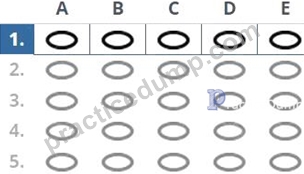
Answer:
Explanation: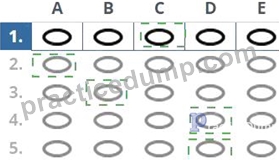
Explanation:
* C. Independent Testing
* A. Collaborative Testing
* B. Repeatable Testing
* D. Prioritised Testing
* D. Prioritised Testing
Short Comprehensive Explanation:
* Independent Testing is appropriate when someone from a different department (Finance) with no involvement in the development process conducts the testing to ensure an objective view.
* Collaborative Testing involves various stakeholders, in this case, the Sales Manager and the solution tester, working together to review and test a prototype, promoting early feedback and shared understanding.
* Repeatable Testing is used for security testing where predefined test scripts (provided by the bank) are applied to ensure the system meets specific security standards and can be repeated as needed.
* Prioritised Testing is essential when the project's stability and core functionality, such as the website's capacity to handle new features, must be confirmed before other tests are conducted to ensure the most critical aspects are addressed first.
* Again, Prioritised Testing is used to ensure that the essential requirements (Must Haves and Should Haves) are tested and validated before moving on to less critical ones (Could Haves), aligning with prioritization in Agile methodologies.
References:The Agile Project Management (AgilePM) framework and principles, as detailed in the AgilePM Practitioner documents and learning resources, guide the application of these testing concepts within an Agile project environment. These resources emphasize the importance of iterative development, stakeholder collaboration, and prioritization of work to ensure project success and alignment with business needs. Specific references to testing approaches and their application within Agile projects can be found in the official AgilePM handbook and practitioner-level training materials available through APMG International and affiliated training providers.
NEW QUESTION # 40
Answer the following questions about the use of the Agile principles.
Final checks carried out on the rooms delivered in Timebox A show that two of the items do NOT meet the required Must Have standards related to the use of traditional wall coverings and paints. These items have therefore been recognised as NOT delivered and will have to be re-planned.
Which Agile principle MOST influences this course of action?
- A. Collaborate.
- B. Communicate continuously and clearly.
- C. Build incrementally from firm foundations.
- D. Never compromise quality.
Answer: D
NEW QUESTION # 41
Xan Insurance Company is a friendly company with no separate private offices for individual managers. Staff members prefer to wander around the office space and have one-to-one chats rather than use email or have lots of meetings.
What action should the Project Manager take when planning for effective communication throughout the Web project?
- A. No action is required as the existing form of spontaneous informal communication is suitable for all project level and Solution Development Team members.
- B. As this is already common practice, assume all Solution Development Team members have effective communication skills.
- C. Identify those individuals with power and influence over the project and what information they require.
- D. Mandate the use of email so that all communications are recorded for future reference.
Answer: C
Explanation:
The most effective action the Project Manager should take to ensure effective communication throughout the Web project at Xan Insurance Company is:
A: Identify those individuals with power and influence over the project and what information they require.
In any project, especially within an Agile framework, understanding the stakeholders' landscape is crucial for effective communication management. Identifying key individuals with power and influence over the project helps tailor communication strategies to ensure that critical information is shared appropriately, decisions are facilitated efficiently, and stakeholder engagement is maintained. While the company's culture of informal communication can be advantageous for day-to-day interactions, structured communication is essential for project governance, risk management, and decision-making processes. This approach allows the Project Manager to ensure that all stakeholders are kept informed according to their needs and the project's requirements, balancing the informal communication culture with the need for formal communication where necessary.
NEW QUESTION # 42
How should the Project Manager encourage the contractors to turn up on time?
- A. Hold a separate Daily Stand-up meeting early in the morning, for the contractors only.
- B. Appoint Team Leaders to each of the electrical and plumbing teams.
- C. Place a penalty clause on all contractors for late arrival.
- D. Encourage open and honest communication to re-establish an environment of trust.
Answer: D
Explanation:
Topic 2, XAN Insurance Company Web Project
XAN Insurance Company Web Project
(Note:
Xan is a medium-sized insurance company with a worldwide
customer base and a strong presence on the internet. Its website
has been in operation for fifteen years. It operates from one location
- a large, open-plan office in the centre of a city. It is a friendly
company with no separate private offices for individual managers.
Staff members prefer to wander around the office space and have
one-to-one chats rather than use email or have lots of meetings.
The Marketing Director is considering a project to develop a new
area on the current web site to sell a new type of insurance directly
to the proprietors of coffee bars, insuring them against minor
accidents to staff and customers. The targeted coffee bars are
privately-owned franchises and are mostly situated in railway
stations, airports and shopping centres.
The Marketing Director has not yet decided whether the system will
just provide information about insurance policies online and give
quotations, the policies then being set up later by normal mailing
and telephone contact. Alternatively, it may be possible for the
system to provide the complete set-up and sale of an insurance
policy online. In this case the system would need to enable the
online capture and processing of credit card details and the issue of
an insurance policy.
The Finance Director has budgetary control over all projects in the
company and is reluctant to release finance for projects where the
outcome, timeframe and benefits are not clear.
Because of the uncertainty about the amount of development and
the length of time it may take, it is difficult to set a timeframe on this project. The Sales Manager, who reports to the Marketing Director, has insisted that the website extensions needed for this project must be operational within 12 weeks. The Sales Manager has a You have been brought in to give advice on how an Agile Project Management approach can be used to keep control of this project and to ensure that it delivers something useful to the business within 12 weeks.
After a brief feasibility assessment, conducted by the Sales
Manager, the Finance Director has decided to authorise a 12-week
project with the objective of producing a prototype system for
insurance for coffee bars, with a release at the end of that time. Six
selected coffee bars have agreed to complete an insurance
application form online, to trial the released website.
NEW QUESTION # 43
Which 2 individuals would be suitable for the role of Workshop Facilitator?
- A. IT Operations Manager
- B. Team Leader
- C. Project Manager
- D. Marketing Director
- E. Software Developer
Answer: B,C
Explanation:
The two individuals most suitable for the role of Workshop Facilitator would be:
A: Team Leader E. Project Manager
The rationale for choosing these individuals is that both the Team Leader and the Project Manager are likely to have the necessary skills to facilitate a workshop effectively. They are typically trained to manage team dynamics, guide discussions, remain neutral, and drive towards a resolution. The IT Operations Manager and the Marketing Director are parties to the disagreement and thus would not be appropriate as facilitators due to the potential for bias. The Software Developer is likely to be more involved in the technical aspects rather than facilitation.
NEW QUESTION # 44
Using the Project Scenario and the additional information provided for
this question in the Scenario Booklet, answer the following questions
about Feasibility.
Remember to limit your answers to the number of selections requested in each question.
Which 2 statements describe the appropriate application of Agile Project Management when developing the Delivery Plan?
- A. The Earth Excavations' Head Gardener should be excluded from discussions related to deliverables since contracts are NOT yet signed.
- B. The Project Manager should NOT need to identify any risks this early in the project.
- C. The Project Manager should include any known constraints associated with planning permission.
- D. The Architecture Angels' Marketing Director should be involved in the development of the Delivery Plan.
- E. The approach to the project should be based on the Project Approach Questionnaire responses.
Answer: C,D
Explanation:
In the context of Agile Project Management, when developing the Delivery Plan during the Feasibility phase, the two statements that best align with Agile principles are:
A: The Project Manager should include any known constraints associated with planning permission.
E: The Architecture Angels' Marketing Director should be involved in the development of the Delivery Plan.
Here's the rationale:
*A: Recognizing and accounting for known constraints such as planning permission is a key aspect of Agile.
It allows for better adaptability and planning around these constraints. Including them early in the Delivery Plan helps ensure that they are considered throughout the project.
*E: Agile emphasizes cross-functional collaboration and stakeholder engagement. The Marketing Director would provide valuable insights into customer needs and market conditions, which are crucial for a successful delivery plan.
NEW QUESTION # 45
Which statement should be recorded under the High-level timing considerations heading?
- A. UniCo's new finance system was delivered in the last quarter and training in the new system is almost complete.
- B. UniCo lost significant market share in the last six months and faces ongoing increased competition in the next year.
- C. Completing the large contract with a Utilities company over the next nine months is a vital step to achieving the end vision.
- D. The traditional market has changed over the last year and UniCo can no longer rest on its previous success.
Answer: C
Explanation:
Comprehensive and Detailed Step-by-Step Explanation:
The High-level timing considerations heading requires statements that emphasize critical timelines, milestones, or deadlines that need to be factored into the change strategy. Here's why D is the most appropriate choice:
1. Understanding High-Level Timing Considerations:
* Timing considerations refer to key deadlines, schedules, or milestones that impact the execution of the change strategy.
* This heading includes initiatives or actions that have a defined timeframe and are crucial for achieving the strategic goals.
2. Option Analysis:
* Option A: The traditional market has changed over the last year and UniCo can no longer rest on its previous success.
* This statement highlights a market condition but does not specify any timeline, milestone, or timing-related requirement. It is more about market trends than timing considerations.
* Eliminate.
* Option B: UniCo lost significant market share in the last six months and faces ongoing increased competition in the next year.
* This statement discusses recent performance and anticipated competition, but it lacks a clear timeline or milestone for action. It is focused on market dynamics, not timing.
* Eliminate.
* Option C: UniCo's new finance system was delivered in the last quarter and training in the new system is almost complete.
* While this mentions past timing, it does not align with the heading as it focuses on completed tasks rather than future timing or milestones.
* Eliminate.
* Option D: Completing the large contract with a Utilities company over the next nine months is a vital step to achieving the end vision.
* This statement provides a clear timeline ("next nine months") and links it to a critical milestone (completing the contract) that contributes directly to UniCo's strategic goals.
* Correct Answer.
3. Relevance in UniCo's Scenario:
* UniCo's focus on repositioning itself in the market and delivering innovative solutions makes the Utilities contract a pivotal milestone. The nine-month timeline directly impacts UniCo's ability to meet its strategic objectives and prove its capability in the new market segment.
4. Agile Practitioner Documentation References:
* Milestone Planning in Agile: Agile emphasizes prioritizing and delivering on critical milestones within time-boxed iterations.
* Strategic Alignment: High-level timing considerations in change strategies align with Agile principles by ensuring key initiatives are completed within the required timeframe to achieve overarching goals.
NEW QUESTION # 46
Which 2 statements explain why the Architecture Angels' Chief Accountant would be an appropriate Business Ambassador?
- A. Has three Accounts Clerks as staff.
- B. Understands the financial realities about what can be afforded and what is needed.
- C. Has been authorised by the Architecture Angels' Marketing Director to take decisions on behalf of the business areas.
- D. Has been with the company for six months so is keen to make an impression.
- E. Runs a personal refurbishment project in any spare time so will be able to interact with the technical staff.
Answer: B,C
NEW QUESTION # 47
The Solution Development Team are progressing through the first Structured Timebox.
What should the Project Manager do to lead the team at this time?
- A. Update the Team Board with a summary of team progress and the current status of work.
- B. Attend the Daily Stand-up and discuss any problems at the end.
- C. Maintain a tight control on progress, recording all discussions and making all decisions.
- D. The Project Manager should do nothing during a Timebox.
Answer: B
NEW QUESTION # 48
Which is the BEST reason to remind learners of related knowledge or skill they already possess?
- A. Enables learners to understand how they learn.
- B. Helps learners plan to use immediately what they learn.
- C. Reduces learners' concerns about new learning.
- D. Increases learners' understanding of what the new learning will enable them to do.
Answer: D
Explanation:
Comprehensive and Detailed Explanation:
This question refers to Gagne's Nine Events of Instruction, a model for designing effective learning activities. One of the steps in this model is to activate learners' prior knowledge, which serves as a foundation for new learning. Here's why C is the best answer:
1. Activating Prior Knowledge in Gagne's Model:
* In Gagne's Nine Events of Instruction, reminding learners of related knowledge or skills is part of the event "Stimulating recall of prior learning."
* This step is crucial as it helps learners connect what they already know to the new content, making the learning process smoother and more meaningful.
2. Why Option C is Correct:
* Reminding learners of related knowledge or skills increases their understanding of what the new learning will enable them to do by providing context and relevance.
* It helps bridge the gap between existing knowledge and new concepts, allowing learners to see the practical value and application of the new material.
3. Analysis of Other Options:
* Option A: Enables learners to understand how they learn.
* While activating prior knowledge might give some insight into learning processes, this is not the primary reason for reminding learners of what they already know.
* Option B: Helps learners plan to use immediately what they learn.
* Planning for immediate application is a valid outcome of effective learning but not the primary reason for recalling prior knowledge.
* Option D: Reduces learners' concerns about new learning.
* While recalling prior knowledge may ease anxiety, this is not the main purpose in Gagne's model. The focus is on understanding and connecting prior knowledge to new concepts.
4. Practical Example:
* If a learner is being introduced to a new software tool, reminding them of their previous experience with similar tools helps them relate to the new content and understand how the new tool will expand their capabilities.
5. Reference to Gagne's Model:
* Event 3: Stimulate Recall of Prior Learning
* This step facilitates the integration of prior knowledge with new material, which enhances comprehension and retention.
NEW QUESTION # 49
......
Pass AgilePM-Practitioner Tests Engine pdf - All Free Dumps: https://certkingdom.practicedump.com/AgilePM-Practitioner-practice-dumps.html